The global electric vehicle market is moving from early adoption toward daily commercial use. The International Energy Agency reported in its Global EV Outlook 2024 that electric car sales exceeded 14 million in 2023. Public charging infrastructure also expanded rapidly, surpassing four million charging points worldwide. Fast charging grew especially quickly. This creates pressure on buyers to select reliable equipment, not merely attractive specifications.
A Smart Dc Charger must deliver more than high output power. Buyers should examine conversion efficiency, load management, remote diagnostics, payment integration, and OCPP compatibility. Thermal protection matters in hot depots and crowded motorway sites. The U.S. Department of Energy’s Alternative Fuels Data Center highlights charging speed, connector standards, and network availability as practical purchasing considerations. These details affect vehicle queues, operating costs, and driver confidence.
Real performance is harder to compare. Carefully. Manufacturers may publish peak power, while field conditions reduce output through heat, voltage limits, or shared cabinets. The IEA and CharIN both emphasize interoperability and dependable charging ecosystems, yet supplier data is not always independently audited. That limitation deserves attention. This guide, “Top 10 Smart DC Charger Suppliers for Global Buyers,” assesses leading companies through product capability, certifications, service coverage, software maturity, and deployment experience. It also considers installation support and spare-parts access, because a failed charger beside a busy logistics hub creates measurable losses. Global buyers should treat this list as a structured starting point, not a final procurement decision. Local grid conditions, vehicle compatibility, and regulatory requirements still require professional verification.
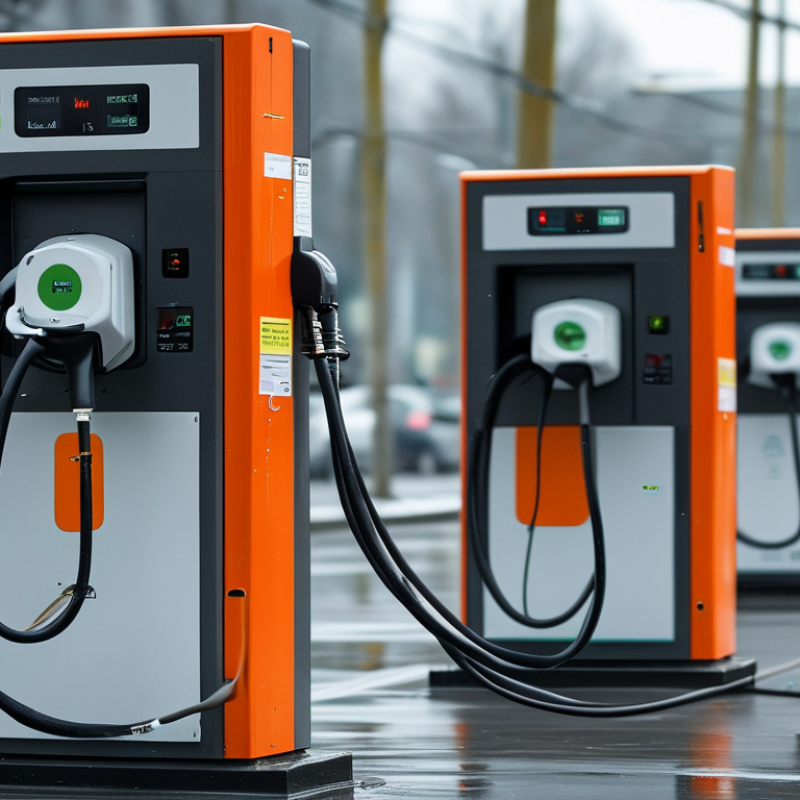
A globally competitive smart DC charger supplier offers more than fast charging hardware. It understands site conditions, grid limits, climate differences, and daily operating pressure. A reliable unit should manage voltage changes, temperature swings, and unstable network connections without frequent service visits. Clear technical documentation matters, especially when installers work across several languages and time zones.
Field evaluation should include practical testing. Check charging output, connector durability, emergency shutdown behavior, and software response. A strong supplier provides traceable test records, regional compliance documents, and firmware updates with controlled release procedures. Remote diagnostics can reduce downtime, but only when data security and user permissions are clearly managed. Spare parts should also be available near major markets. Delays of three weeks can damage an otherwise strong project.
Service quality often separates capable suppliers from merely affordable ones. Ask how quickly engineers answer faults and whether support continues after installation. Warranty terms should explain labor, replacement parts, and performance limits in plain language. No supplier is perfect. Some technical promises look impressive but lack long-term operating evidence. Buyers should request references, pilot results, and failure reports, not only polished brochures. That extra scrutiny may slow purchasing. It can prevent expensive surprises later.
Choosing among the top 10 smart DC charger suppliers requires more than comparing power ratings. The IEA’s Global EV Outlook 2024 reported that global public charging points exceeded four million in 2023. Fast-charging capacity also grew rapidly. Buyers should therefore examine field performance, not only product brochures.
Check compliance with IEC 61851, ISO 15118, and suitable OCPP versions. These standards support safer charging and better software interoperability. Ask for independent test reports, thermal derating curves, and efficiency data at partial loads. A 240 kW charger may deliver less power during a hot afternoon. That detail matters.
Look for evidence from real installations. Request uptime records, fault-recovery times, spare-parts policies, and technician response targets. The U.S. National Renewable Energy Laboratory highlights reliability and availability as critical factors for public charging networks. Cybersecurity also deserves attention, including secure updates, access control, and vulnerability management. ISO 27001 certification can provide useful evidence, but certification alone proves little. Battery communication support, remote diagnostics, payment integration, and load management should match the site’s operating model. Some suppliers provide impressive dashboards but weak local service. That is where evaluations often fail. Require references from climates and traffic levels similar to your project. Supplier stability, warranty terms, and software ownership can influence total cost more than the initial quotation.
Profiles of the Top 10 Smart DC Charger Suppliers
These supplier profiles reflect practical buying criteria, not promotional rankings. The first profile covers utility-scale manufacturers offering high-power cabinets, liquid cooling, and remote diagnostics. The second focuses on commercial charging specialists serving retail parks, hotels, and office campuses. Their systems usually support dynamic load balancing and several payment options. Field proof matters.
The third profile represents fleet-focused suppliers. They connect chargers with depot software, energy schedules, and vehicle records. The fourth supplies modular platforms, allowing operators to replace power modules without removing the whole cabinet. The fifth targets harsh climates, using sealed enclosures, corrosion protection, and temperature monitoring. The sixth profile emphasizes software intelligence, including OCPP compatibility, fault alerts, and usage reports. Smart features need testing.
The seventh group provides contract manufacturing and private-label engineering for established distributors. The eighth concentrates on safety documentation, regional testing, and traceable component control. The ninth offers custom engineering for unusual grid limits, cable lengths, or parking layouts. The tenth maintains a broad service network with spare parts, technician training, and response targets. Buyers should request real installation records, warranty terms, and maintenance procedures. A claimed uptime figure still needs independent evidence. One weakness remains common: some suppliers explain charging speed clearly but describe cybersecurity vaguely. Ask how firmware updates, user access, and data storage are controlled. Also check whether local technicians can solve a failed connector during a busy operating day.
| Profile | Primary Market Region | Typical DC Output Range | Charger Configuration | Common Connector Standards | Smart Charging Functions | Communication Protocols | Safety and Compliance Scope | Typical Applications | Global Buyer Fit |
|---|---|---|---|---|---|---|---|---|---|
| Supplier Profile 01 | Western Europe | 30–180 kW | Single- and dual-output DC fast chargers | CCS2; optional CHAdeMO | Dynamic load balancing, scheduled charging, remote diagnostics, RFID authorization | OCPP 1.6J; Ethernet; 4G/5G options | CE-oriented design; IEC 61851; IEC 62196; residual-current protection | Public charging, fleet depots, highway service areas | High |
| Supplier Profile 02 | East Asia | 20–240 kW | Compact wall-mounted and floor-standing systems | GB/T; CCS2; CCS1 options | Peak-load control, charger grouping, tariff-based charging, cloud monitoring | OCPP 1.6J; CAN; 4G connectivity | IEC 61851; IEC 62196; overvoltage, overcurrent and surge protection | Commercial parking, workplaces, retail sites | High |
| Supplier Profile 03 | North America | 60–350 kW | High-power modular charging cabinets with satellite dispensers | CCS1; NACS-compatible configurations | Power sharing, queue management, remote firmware updates, payment integration | OCPP 1.6J or 2.0.1; Ethernet; cellular networks | UL-oriented certification pathway; NEC installation requirements; GFCI protection | Highway corridors, electric truck charging, large fleet sites | High |
| Supplier Profile 04 | Central and Eastern Europe | 40–160 kW | Weather-resistant outdoor DC charging stations | CCS2; CHAdeMO options | Load management, user authentication, energy metering, fault notifications | OCPP 1.6J; Modbus TCP; 4G | CE marking framework; IEC 61851; IP54 or higher enclosure options | Municipal charging, hotels, shopping centers, fuel-station conversion | High |
| Supplier Profile 05 | South Korea and Southeast Asia | 30–200 kW | Scalable modular systems for mixed vehicle fleets | CCS1; CCS2; CHAdeMO options | Automatic power allocation, charging-session records, remote monitoring, user access control | OCPP 1.6J; MQTT or HTTPS cloud connection | IEC-based electrical protection; emergency-stop functionality; thermal monitoring | Bus depots, logistics fleets, commercial properties | Medium–High |
| Supplier Profile 06 | China and international export markets | 20–480 kW | Modular cabinet systems and integrated fast chargers | GB/T; CCS2; CCS1; CHAdeMO options | Dynamic power sharing, solar-storage coordination, reservation, remote maintenance | OCPP 1.6J; CAN; Ethernet; 4G | IEC 61851; IEC 62196; IP54/IP55 options; surge and insulation monitoring | Fleet charging, bus charging, charging hubs, overseas projects | High |
| Supplier Profile 07 | United Kingdom and Northern Europe | 50–300 kW | Rapid chargers with integrated payment and networking hardware | CCS2; CHAdeMO options | Smart queuing, contactless payment support, remote status monitoring, energy management | OCPP 1.6J; Ethernet; 4G/5G | CE-oriented compliance; IEC 61851; MID-compatible metering options | Public networks, retail parking, motorway charging | High |
| Supplier Profile 08 | Southern Europe | 30–180 kW | Outdoor DC chargers designed for hot and coastal climates | CCS2; CHAdeMO; GB/T options for selected markets | Temperature-based derating, remote reset, charging analytics, load scheduling | OCPP 1.6J; Modbus; cellular connectivity | IEC 61851; IEC 62196; IP55 options; thermal and insulation protection | Tourism locations, parking operators, service stations | Medium–High |
| Supplier Profile 09 | Australia and Asia-Pacific | 25–150 kW | Compact DC chargers for distributed charging networks | CCS2; CHAdeMO options | Solar-aware charging, demand response, remote alerts, user and site management | OCPP 1.6J; Ethernet; 4G | IEC 61851; IEC 62196; local grid-connection requirements; IP-rated enclosure | Regional highways, workplaces, dealerships, remote sites | Medium–High |
| Supplier Profile 10 | Middle East, Africa and emerging markets | 30–240 kW | Ruggedized DC fast chargers with optional battery-buffer integration | CCS2; CCS1; GB/T options | Microgrid coordination, generator-aware charging, remote diagnostics, offline transaction storage | OCPP 1.6J; Ethernet; 4G or satellite backhaul options | IEC 61851; IEC 62196; high-temperature protection; dust and water resistance | Fleet depots, oil-and-gas site conversion, remote public charging | Medium–High |
When comparing the top ten smart DC charger suppliers, product range matters more than headline power. Some offer compact 20–60 kW units for retail sites, while others focus on 120–240 kW highway chargers. Buyers should check connector options, cable length, cooling design, and operating temperature. A charger rated at 180 kW may deliver less power when several vehicles charge together. That detail is easy to miss.
Smart features also require practical testing. Look for OCPP compatibility, remote monitoring, load balancing, payment integration, and automatic fault alerts. ISO 15118 readiness can support future vehicle communication, but implementation quality varies. Certifications such as CE, UL, IEC 61851, IEC 62196, and ISO 9001 should match the target market and product model. Do not rely on a certificate shown only in a sales presentation. Verify its scope and validity.
Support separates dependable suppliers from ordinary exporters. Strong providers offer installation guidance, commissioning checklists, spare parts, firmware updates, and trained regional technicians. Ask for documented response times and anonymized uptime records from similar projects. Field experience shows that response speed often matters more than a polished dashboard. A beautiful interface cannot repair a failed cooling fan. Some comparisons remain imperfect because suppliers report performance under different conditions. Buyers should request site-specific tests, warranty exclusions, and clear service terms before signing.
Choosing a smart DC charger supplier requires more than comparing power ratings and catalogue prices. Global buyers should examine field experience, engineering depth, and after-sales reliability.
Ask how many chargers operate in climates like yours. Request data from similar sites, not polished claims. A coastal bus depot may expose equipment to salt, heat, dust, and unstable network signals. Real evidence matters.
Confirm output ranges, connector compatibility, communication protocols, load balancing, remote diagnostics, and cybersecurity updates. Verify compliance with local electrical and communication requirements before purchasing.
Ask for test reports, warranty exclusions, spare-part lead times, and installer training. A dependable supplier should explain fault handling clearly.
Who answers at 2 a.m.? That question matters.
Compare suppliers through a practical pilot, not only through brochures.
Inspect production controls, component traceability, software update procedures, and calibration records. Calculate total ownership costs, including energy losses, maintenance, downtime, and replacement parts.
Require clear service levels for response and repair. No checklist is perfect. Buyers can still underestimate site integration time, grid upgrades, or network limitations.
Leave room for testing, correction, and honest discussion before signing a large order.