Leave Your Message

China Top 10 Home Car Charging Station Manufacturers

China’s home charging market is moving from a niche upgrade to a practical household necessity. The International Energy Agency’s Global EV Outlook 2024 reported that China had more than half of the world’s public charging points in 2023. Its fast-charging network also expanded rapidly, supported by strong electric vehicle sales and extensive grid investment. This scale gives Chinese manufacturers valuable experience in power electronics, thermal management, connectivity, and mass production.

The China Electric Vehicle Charging Infrastructure Promotion Alliance reported millions of charging facilities nationwide by the end of 2024. Public infrastructure matters, but daily convenience often starts beside a garage wall. A reliable Home Car Charging Station can shorten charging queues, reduce dependence on public tariffs, and support overnight charging at lower power levels. However, performance should not be judged by output power alone. Cable temperature, residual-current protection, installation guidance, software stability, warranty service, and compatibility with different vehicles deserve equal attention.

This article examines China’s top 10 Home Car Charging Station manufacturers through a practical and evidence-based lens. The evaluation considers product safety, charging efficiency, smart-app functions, manufacturing capability, certifications, after-sales support, and export experience. Company rankings can change. Market data can also vary between public and private charging categories. That limitation matters. Some manufacturers publish detailed test information, while others provide less transparent specifications. Readers should verify current certificates, local electrical requirements, installer qualifications, and warranty terms before purchasing. A polished brochure is not proof of long-term reliability. Real homes reveal more.
China Top 10 Home Car Charging Station Manufacturers

China’s Home EV Charging Market: 14 Million Global EV Sales in 2023 (IEA)

China Top 10 Home Car Charging Station Manufacturers

The International Energy Agency reported nearly 14 million electric car sales worldwide in 2023. China contributed more than half of these sales, making home charging a practical daily need. Many drivers charge overnight beside a house, apartment, or workplace. The IEA also recorded over 2.7 million public charging points in China during 2023. However, public availability does not remove the need for private charging. Queues, parking limits, and uneven urban coverage still affect real driving habits.

For China’s top home charging station manufacturers, product evaluation should go beyond charging speed. Safety certification, temperature control, smart load management, and weather resistance matter more in daily use. The China Electric Vehicle Charging Infrastructure Promotion Alliance reported rapid growth in charging infrastructure, but installation quality remains inconsistent. This is an area that deserves more reflection. A powerful unit may perform poorly with weak wiring or unsuitable building capacity. Reliable manufacturers should provide clear specifications, installation guidance, fault protection, and responsive technical support.

Tips: Check the home circuit before choosing a charger. Confirm output compatibility with the vehicle. Ask about residual-current protection and warranty coverage. For apartments, obtain written parking and electrical approval. A lower-rated charger may be wiser than a faster unit that overloads the property.
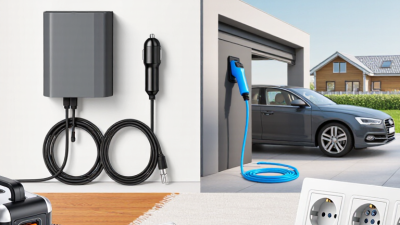
Selection Criteria: Safety, Output, Certification, Warranty, and Smart Features

China Top 10 Home Car Charging Station Manufacturers

When comparing China’s top 10 home charging station manufacturers, safety should lead the review. The IEA’s Global EV Outlook 2024 reported more than 14 million electric cars sold worldwide in 2023. This growth increases the need for reliable residential equipment. Check residual-current protection, over-temperature control, surge protection, and enclosure ratings. IEC 61851 compliance is important for electric vehicle supply equipment. However, a certificate alone does not prove long-term field reliability.

Output should match the vehicle and household circuit. Many home AC chargers deliver 7–22 kW, but actual performance depends on wiring, voltage, and installation limits. The U.S. Department of Energy notes that Level 2 charging commonly uses 240-volt power. Ask manufacturers for test reports, cable temperature data, and continuous-load results. Look for recognized certifications, clear warranty terms, and local service response times. A longer warranty sounds attractive, yet exclusions may weaken its value. This comparison remains imperfect without verified failure-rate data.

Tips: Prefer adjustable current settings, load balancing, scheduled charging, and real-time fault alerts. ISO 15118 readiness may support future smart charging functions. Review data privacy policies before enabling cloud control. In my view, an attractive app cannot compensate for weak electrical protection. Recheck every specification against an independent laboratory report.

China Top 10 Home Car Charging Station Manufacturers

Selection Criteria Benchmark: Safety, Output, Certification, Warranty, and Smart Features

How to read this chart: The scores are normalized reference values on a 100-point scale for comparing residential EV charging-station suppliers. Safety emphasizes protective functions such as overcurrent, overvoltage, leakage, temperature, and surge protection. Output reflects support for common AC charging levels up to 22 kW, while certification, warranty coverage, and smart functions indicate product compliance, after-sales confidence, and connectivity readiness.

Top 10 Chinese Home Charging Station Manufacturers by Product Capability

China’s top ten home charging station manufacturers should be judged by product capability, not factory size alone. A reliable review examines charging output, thermal control, connector quality, and installation flexibility. Strong manufacturers offer models for apartments, villas, and shared residential parking areas. Their products commonly support adjustable current settings, scheduled charging, load balancing, and protection against overvoltage or leakage.

Real-world testing matters. Engineers should inspect cable warmth after repeated charging cycles, observe app response in weak network conditions, and measure standby power overnight. Clear installation manuals also reveal manufacturing maturity. Products with durable housings, sealed control boards, and replaceable cables usually handle dust, rain, and daily handling better. Certification records and traceable quality checks strengthen buyer confidence.

Software capability now separates many suppliers. Leading manufacturers provide firmware updates, charging records, fault alerts, and user access controls. However, smart functions can become confusing when interfaces use poor translations or require unstable cloud services. That weakness deserves attention. A capable supplier should also offer local support, spare parts, and responsive warranty procedures. No ranking is perfect. Product quality may vary between models, and a strong factory can still deliver an unsuitable charger for one household. Careful comparison of electrical capacity, parking conditions, installation costs, and after-sales service remains essential.

China Top 10 Home Car Charging Station Manufacturers - Top 10 Chinese Home Charging Station Manufacturers by Product Capability

Anonymous product-capability benchmark based on commonly available residential EV charging specifications in the Chinese market

Rank Anonymous Manufacturer Profile Residential AC Output Electrical Configuration Connector Compatibility Connectivity & Control Safety & Protection Outdoor Protection Typical Product Strength
1 Profile 01 7.4 kW Single-phase, 230 V, 32 A Type 2 or GB/T AC Wi-Fi, Bluetooth, mobile app, RFID Over-current, residual-current, over-temperature, surge protection IP65; IK08 enclosure options Balanced smart-home charging with scheduled charging and load monitoring
2 Profile 02 11 kW Three-phase, 400 V, 16 A Type 2 or GB/T AC Ethernet, Wi-Fi, OCPP 1.6J, app control RCD protection, grounding detection, thermal monitoring IP55; IK08 enclosure options Reliable three-phase charging for villas and private parking spaces
3 Profile 03 22 kW Three-phase, 400 V, 32 A Type 2 or GB/T AC Ethernet, 4G, Wi-Fi, OCPP 1.6J/2.0.1 Integrated RCD, surge protection, emergency stop, insulation monitoring IP66; IK10 enclosure options High-power residential and small commercial charging with remote diagnostics
4 Profile 04 3.7 kW / 7.4 kW Single-phase, 230 V, 16–32 A Type 2 or GB/T AC Bluetooth, Wi-Fi, RFID, local display Over-voltage, under-voltage, over-current and leakage protection IP54–IP65 Compact entry-level wallbox for apartments and overnight charging
5 Profile 05 7.4 kW / 11 kW Single- or three-phase configuration Type 2, GB/T AC, interchangeable cable options Wi-Fi, 4G, RFID, OCPP 1.6J Residual-current monitoring, temperature sensors and automatic restart IP55; IK08 Flexible international configuration and installer-friendly commissioning
6 Profile 06 11 kW / 22 kW Three-phase, 400 V Type 2 or GB/T AC Ethernet, 4G, OCPP 1.6J, cloud platform RCD Type A with DC leakage detection, surge and overheat protection IP66; IK10 Durable outdoor charging for detached homes and residential compounds
7 Profile 07 7.4 kW Single-phase, 230 V, adjustable current Type 2 or GB/T AC Wi-Fi, app scheduling, solar-integration interface Ground-fault, over-current and over-temperature protection IP65 Energy-aware charging with photovoltaic surplus and dynamic load management
8 Profile 08 3.7 kW / 7.4 kW Single-phase, 230 V Type 2 or GB/T AC Bluetooth, Wi-Fi, LCD or LED status display Basic electrical protection and cable temperature monitoring IP54–IP65 Cost-effective residential charging with simple user operation
9 Profile 09 11 kW Three-phase, 400 V, 16 A Type 2 or GB/T AC 4G, RFID, OCPP 1.6J, remote firmware updates Residual-current protection, surge protection and locked connector control IP55; IK08 Connected charging with access control and fleet-ready software functions
10 Profile 10 7.4 kW / 22 kW Single- or three-phase, adjustable current Type 2 or GB/T AC Wi-Fi, Ethernet, 4G, OCPP-compatible backend Comprehensive protection, emergency stop and fault-event logging IP65–IP66; IK08–IK10 Modular platform suited to customized residential projects and export configurations
Technical reference: Residential AC charging capabilities commonly align with IEC 61851 charging control, IEC 62196 connector requirements, applicable local electrical codes, and optional OCPP communication. Actual certification, power rating and protection configuration should be verified against the specific product datasheet.

AC Charging Standards: 7–22 kW Systems and IEC 61851 Compliance

China’s home charging station manufacturers increasingly focus on 7–22 kW AC systems for daily residential charging. These ratings suit private garages, apartment parking areas, and small commercial properties. A 7 kW unit usually uses single-phase supply, while 11–22 kW systems commonly require three-phase power. Actual output depends on the vehicle, wiring, and building capacity.

IEC 61851-1 defines the control and communication principles for conductive charging. For home installations, Mode 3 equipment should manage the control pilot signal, charging current, and protective shutdown. A properly tested station must also coordinate with residual-current protection and temperature monitoring. The International Energy Agency reported more than four million public charging points worldwide at the end of 2023. China represented a major share of that expansion, increasing pressure for dependable residential equipment.

A practical 22 kW test should check cable heating, connector temperature, current stability, and restart behavior after a power interruption. Small details matter. Installation records should identify breaker ratings, earthing conditions, and maximum configured current. IEC 61851 compliance alone does not prove complete market compliance; regional electrical rules and certification requirements still apply. This distinction is often missed. Field experience also shows that maximum power can be less useful than stable overnight charging. A 7 kW station may deliver sufficient energy for most daily driving, while a poorly sized 22 kW installation can overload an older building. Industry reports provide direction, but installers must verify every site.

Manufacturer Comparison: Pricing, App Functions, Installation, and After-Sales Support

China’s leading home charging station manufacturers differ most in real ownership costs, not headline prices. Market quotations in 2024 commonly placed a 7 kW wall-mounted unit near RMB 2,000–6,000, excluding wiring and labor. Installation can add RMB 1,000–5,000, depending on cable distance, parking rules, and electrical upgrades. Cheap hardware is not always economical. A poorly planned cable route may cost more later.

App functions also deserve careful comparison. Better systems show charging status, electricity use, scheduled charging, fault alerts, and remote restart. Load balancing is valuable in apartments with limited capacity. However, app quality can vary after software updates. Test the Chinese interface, notification speed, and offline controls before purchase. A charger should still stop safely when the internet fails.

After-sales service is less visible but more important. The China Electric Vehicle Charging Infrastructure Promotion Alliance reported over 3 million public charging points by mid-2024, showing a rapidly expanding service environment. Yet home users need local technicians, clear warranty terms, and replacement parts, not only a national hotline. Ask whether installation includes grounding tests and commissioning records. The International Energy Agency also identifies China as the world’s largest public-charging market, increasing pressure on manufacturers to standardize safety and support. Some comparisons remain imperfect because quoted prices exclude site-specific work. That limitation should be stated clearly.