Top Off Grid Solar EV Chargers for Global Buyers
Choosing an Off Grid Solar Ev Charger requires more than comparing charging speed and panel capacity. Global buyers must examine sunlight conditions, battery storage, vehicle compatibility, and local electrical requirements. A charger that performs well in Arizona may struggle during a cloudy winter in northern Europe. Real-world performance depends on temperature, cable length, inverter efficiency, and daily driving habits.
This guide reviews leading off-grid solar charging options through a practical, evidence-informed lens. It considers installation quality, weather resistance, monitoring features, maintenance needs, and long-term operating costs. Product specifications matter, but field experience often reveals more. Dust can cover panels. Frost can reduce output. Batteries may not deliver their advertised capacity under heavy loads.
Small details matter.
Reliable systems usually combine solar panels, a charge controller, battery storage, safety protection, and a compatible EV charger. Buyers should confirm certification, warranty coverage, service availability, and replacement-part access before ordering internationally. Professional installation is strongly recommended, especially where high-voltage equipment or complex grounding is involved.
No product suits every market. That is the uncomfortable part. Some systems look affordable but require costly batteries or structural work. Others offer impressive power but depend on stable weather. This overview may not answer every site-specific question, and performance estimates can change after installation. Still, it provides a clear starting point for comparing trusted solutions and making a safer, more informed purchase.
Off-Grid Solar EV Charging Market: 17 Million EV Sales in 2024 (IEA)
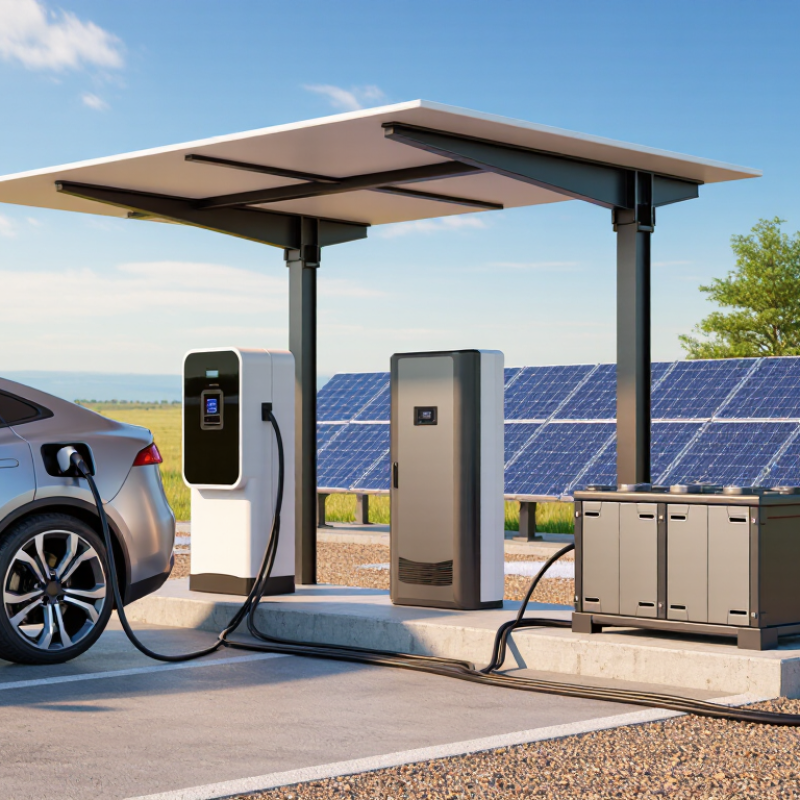
The off-grid solar EV charger market is gaining urgency as electric mobility expands beyond urban grids. The IEA’s Global EV Outlook 2025 reports more than 17 million electric cars were sold worldwide in 2024. That volume increases demand for charging in farms, remote workplaces, islands, and roadside properties. Off-grid systems combine solar panels, batteries, inverters, and managed charging controls. A typical installation may need 10–20 kW of solar capacity, depending on vehicle use, sunlight, and seasonal demand. It is not a universal formula.
Tips: Measure daily driving distance before choosing equipment. Size the battery for cloudy days, not perfect sunshine. Check local voltage and grid-isolation requirements. Also, confirm spare-parts access before importing hardware.
Cost remains a serious decision. IRENA’s Renewable Power Generation Costs report places global utility-scale solar PV costs at about USD 0.044 per kWh in 2023. Small off-grid systems usually cost more because batteries, mounting, transport, and installation are included. A charger delivering 7 kW may be practical for overnight parking, while higher-power units can drain storage quickly. Field experience shows that dust, heat, weak communications, and winter shading often reduce expected output. Buyers should request tested performance data, battery-cycle information, protection ratings, and clear maintenance procedures. Forecasts can look impressive. Real sites are less tidy.
Top Off Grid Solar EV Chargers for Global Buyers - Off-Grid Solar EV Charging Market: 17 Million EV Sales in 2024 (IEA)
| Off-Grid Charger Configuration |
Typical AC Output |
Recommended Solar Array* |
Recommended Battery Storage* |
Approx. Energy Added in 4 Sun-Hours |
Best-Fit Application |
Key Buyer Checks |
| Portable solar EV charger |
1.4–3.7 kW |
2–5 kWp |
5–15 kWh |
5.6–14.8 kWh |
Remote homes, emergency charging and occasional travel |
Weight, weather resistance, connector compatibility and inverter waveform |
| Residential off-grid AC charger |
3.7–7.4 kW |
6–10 kWp |
15–30 kWh |
14.8–29.6 kWh |
Daily home charging for one passenger EV |
Single-phase voltage, load management, anti-islanding and battery reserve settings |
| High-power residential or farm system |
7.4–11 kW |
10–18 kWp |
25–50 kWh |
29.6–44 kWh |
Large homes, farms and small rural workplaces |
Three-phase availability, peak-load control, grounding and local electrical approval |
| Community or fleet off-grid station |
11–22 kW per AC point |
30–80 kWp |
80–200 kWh |
44–88 kWh per charging point |
Rural tourism, agricultural fleets and shared charging sites |
Multiple-vehicle scheduling, power sharing, communications and physical security |
| Solar-assisted DC fast-charging station |
20–60 kW DC |
50–150 kWp |
150–500 kWh |
80–240 kWh |
Highway rest areas, logistics yards and remote public sites |
DC isolation, thermal management, surge protection, payment system and service access |
Global buyer reference data
- Nearly 17 million electric cars were sold worldwide in 2024, according to the International Energy Agency.
- AC charging is generally suited to overnight or workplace charging; DC charging is designed for shorter dwell times and requires substantially larger power-conversion and battery systems.
- Solar-array and battery figures are indicative engineering ranges for an off-grid system, not guaranteed product ratings. Final sizing should use local solar-resource data, vehicle consumption, seasonal conditions, backup requirements and charging frequency.
- Energy estimates use the simplified relationship: solar capacity × 4 equivalent full-sun hours. Actual delivered energy is lower or higher depending on temperature, shading, orientation, conversion losses and battery state of charge.
Source reference: International Energy Agency, Global EV Outlook 2025; technical ranges are indicative system-design values.
Solar Resource and PV Sizing: 1,000–2,500 kWh/m² Annual Irradiance (NREL)
For global buyers, off-grid solar EV charging begins with the solar resource, not the charger label. NREL maps annual irradiation from roughly 1,000 to 2,500 kWh/m² across suitable regions. This range is wide. A site near 1,000 receives less than half the annual solar energy of a 2,500 site. Yet annual averages can hide cloudy seasons, dust, snow, and shading. A field check matters.
A practical design converts irradiation into usable electricity. A 10 kW PV array may theoretically produce 10,000–25,000 kWh yearly before losses, using this range. Inverters, temperature, wiring, battery cycling, and charging losses reduce that figure. A conservative planning factor of 70–85% is often more realistic, but local measurements should replace assumptions. At a 1,000 kWh/m² site, winter production may limit daily vehicle charging. Battery storage then needs enough capacity for several poor-sun days, not just one evening.
Experience shows that charger power can mislead buyers. A 22 kW charger needs a strong supply, while a smaller unit may match remote generation better. Size the system from daily driving demand, seasonal solar data, and acceptable backup use. Use tilt and orientation suited to the site, then test output after installation. Keep records. Early estimates are rarely perfect. A dust-covered array can quietly reduce expected driving range. Recheck production monthly, especially after storms or landscaping changes. Independent electrical review and documented component ratings improve safety and long-term reliability.
Off-Grid Solar EV Charger: Solar Resource and PV Sizing
Representative annual global horizontal irradiance levels within the 1,000–2,500 kWh/m² range.
The estimated PV capacity assumes an EV charging demand of 20 kWh per day and an 80% overall system performance ratio.
Higher solar irradiation reduces the PV capacity required to supply the same off-grid charging demand.
Actual system design should also include battery storage, seasonal variation, temperature, shading, and local load patterns.
Battery Storage and Charger Output: 85–95% Round-Trip Efficiency (NREL)
Off-grid solar EV charging depends on more than panel size. Battery storage and charger output must work together. NREL analyses commonly place round-trip battery-system efficiency near 85–95%. This means 5–15% of stored energy disappears through conversion, cooling, wiring, and standby demand. Real sites are messier.
For global buyers, charger selection should begin with usable energy, not advertised battery capacity. A 20 kWh battery operating at 90% round-trip efficiency may deliver about 18 kWh after a complete charge-and-discharge cycle. A 60 kWh vehicle could therefore need several sunny hours, even before weather and charging losses are considered. The International Energy Agency reports that public charging power varies widely across markets, making local grid conditions and driving patterns important design inputs.
Field checks also matter.
Measure solar production, battery temperature, cable losses, and delivered vehicle energy during several charging sessions. Compare those readings with the equipment’s data sheet. A charger promising high output may still underperform during cloudy afternoons or hot battery conditions. That gap is easy to overlook.
NREL’s Storage Futures Study emphasizes that efficiency depends on system boundaries and operating conditions, not one universal number. Buyers should request efficiency curves, standby consumption, surge limits, and tested performance at partial loads. I would also leave capacity headroom. Oversizing feels inefficient, yet running a system constantly near its limits can shorten service life and reduce dependable charging availability.
Global Standards and Safety: IEC 61851, ISO 15118, and IP Ratings
For global buyers, an off-grid solar EV charger must do more than convert sunlight into driving range. It must communicate safely with different vehicles and withstand uncertain outdoor conditions. IEC 61851 defines key control and protection functions for conductive charging. It helps manage the pilot signal, charging state, and basic fault response. This matters when solar output changes quickly behind a cloud. Poor coordination can interrupt charging or stress electrical components. Small details matter.
ISO 15118 supports higher-level communication between the vehicle and charger. Depending on implementation, it can exchange charging information, manage authentication, and support controlled power flows. Buyers should verify the exact version, software functions, and vehicle compatibility. “ISO 15118-ready” is not always enough. Ask for test evidence, communication logs, and clear firmware update procedures. In remote installations, a failed update may require a long service trip. That practical cost is easy to underestimate.
IP ratings describe protection against dust and water entering the enclosure. An IP65 unit resists dust and water jets, but it is not automatically safe after flooding or condensation. Mounting height, cable glands, drainage, UV exposure, and temperature range deserve equal attention. Certification should cover the complete charger, not only selected internal parts. Local electrical rules still apply, even when the system is isolated from the grid. A careful buyer checks earthing, residual-current protection, emergency access, and maintenance instructions. The honest weakness is often documentation. If ratings, test conditions, or limits are vague, pause before purchasing. Do not guess.
Top Charger Selection: Comparing Power, Cost, Autonomy, and Warranty Metrics
Top Off Grid Solar EV Chargers for Global Buyers
Choosing an off-grid solar EV charger requires more than comparing charging speed. Power output should match your vehicle, battery bank, and daily driving distance. A higher-rated charger may seem attractive, but it can demand expensive panels, thicker cables, and larger inverters. Installation costs often change the entire calculation. Review equipment, transport, mounting, wiring, and maintenance together.
Autonomy depends on sunlight, storage capacity, and local weather patterns. A system producing 20 kilometers of range on a clear summer day may perform very differently during cloudy weeks. I still find autonomy estimates easy to overstate. Use seasonal data, not ideal conditions. Cost matters, but reliability matters more when grid access is limited. Check warranty length, covered components, labor terms, and exclusions for heat, dust, water, and improper installation. A long warranty means little if international service is unclear.
Tips:
Request a written energy model for your location. Ask how many kilometers the system can deliver in winter. Confirm battery replacement costs and monitoring requirements. Keep installation records and inspect connectors twice yearly. Small details matter. A modest charger with realistic output may serve better than a powerful system that regularly sits unused. Recheck your driving habits after purchase, because initial estimates can be wrong.