2026 Top Off Grid Solar EV Chargers for Global Buyers
The 2026 market for off-grid electric vehicle charging is becoming more practical, but it is not simple. An Off Grid Solar Ev Charger must balance solar generation, battery storage, inverter capacity, and vehicle demand. A sunny brochure cannot replace measured performance. Real buyers need dependable charging during cloudy mornings, cold nights, and seasonal energy shortages.
This guide examines leading systems for global buyers through practical and technical criteria. It considers charging power, battery chemistry, solar input, weather resistance, installation requirements, and monitoring functions. A typical setup may include rooftop panels, a 10-kilowatt-hour battery, and a protected wall-mounted charger. However, vehicle compatibility and grid-independent safety features can differ between regions. Buyers should confirm connector types, voltage ranges, local certification, and qualified installation support before ordering.
Field experience shows that the cheapest system is rarely the most reliable choice. Oversized chargers may drain batteries quickly. Small systems may leave drivers waiting for sunlight. No ranking is perfect. Product availability, shipping conditions, and regional regulations can also change during 2026. That limitation matters. This overview therefore focuses on transparent comparisons rather than exaggerated promises. It highlights suitable options for homes, farms, remote workplaces, and small commercial sites. Readers will find practical guidance for comparing daily driving distance, solar exposure, storage capacity, and emergency charging needs. The best solution is not always the fastest one. It is the system that performs safely and consistently where it is installed.
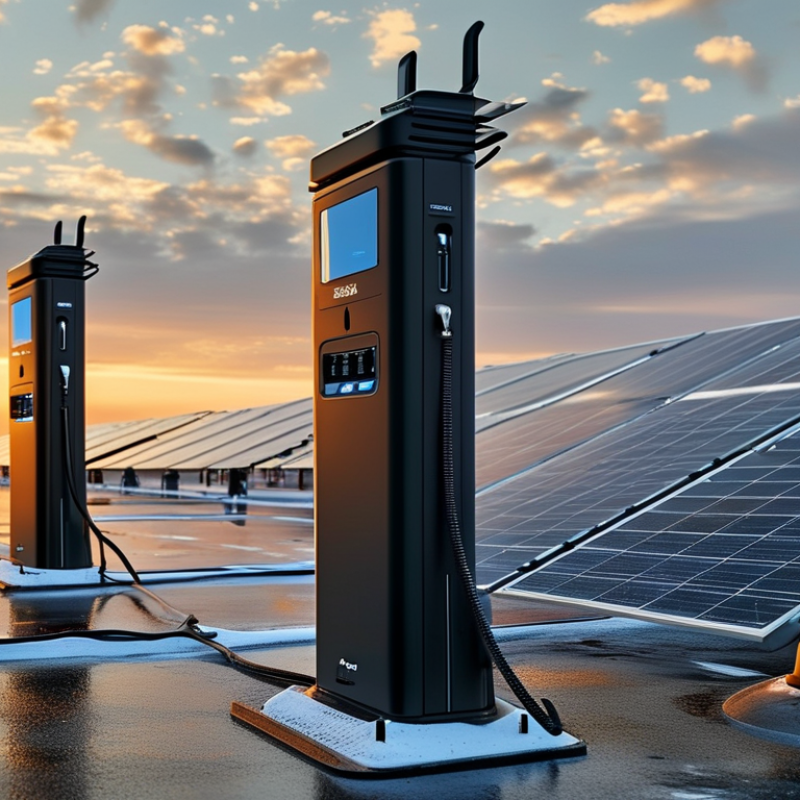
Off-Grid Solar EV Chargers: Definition, Components, and Core Functions
Off-Grid Solar EV Chargers: Definition, Components, and Core Functions
An off-grid solar EV charger produces electricity without relying on the public grid. It combines photovoltaic panels, a charge controller, battery storage, an inverter, and EV charging equipment. The solar panels generate direct current during daylight. The controller manages voltage and protects the battery from overcharging. A battery stores energy for evening charging, cloudy periods, and sudden demand. The inverter converts stored power when alternating-current charging is required.
The system also needs fuses, disconnect switches, grounding, monitoring, and weather-resistant housing. These details matter in dusty farms, remote lodges, and roadside locations. A practical installation should display battery state, solar output, charging power, and fault warnings. The International Energy Agency reported more than 17 million electric cars sold worldwide in 2024, representing over 20% of new car sales. That growth increases demand for charging beyond urban networks (IEA, Global EV Outlook 2025).
Solar capacity is expanding quickly. IRENA recorded about 1,865 GW of global solar photovoltaic capacity by the end of 2024 (Renewable Capacity Statistics 2025). However, solar abundance does not guarantee reliable charging. Winter shading, high temperatures, and battery aging can reduce available energy. Sizing only from annual sunshine is risky. I have seen theoretical designs fail during several cloudy days. A stronger design uses local hourly weather data, realistic driving patterns, and reserve capacity. Sometimes, a smaller charger performs better because it matches the site’s actual solar supply.
How Solar EV Charging Systems Operate Without Grid Electricity
An off-grid solar EV charger creates its own energy loop.
Solar panels convert sunlight into direct current during daylight. A charge controller tracks panel voltage and protects the battery from unstable charging. The battery stores midday energy for evening or cloudy sessions. An inverter supplies alternating current when the vehicle charger requires it. Some systems deliver controlled DC directly, reducing conversion losses. The vehicle’s charging controller communicates with the equipment before power flows.
During a typical session, an energy-management unit checks battery voltage, solar production, and vehicle demand. If clouds pass, it lowers charging power instead of draining the storage bank too quickly. A site with six kilowatts of panels may produce far less on a winter afternoon. That difference matters. Sizing depends on local sunlight, driving distance, battery capacity, and recovery time. Cable protection, ventilation, grounding, and weather-rated enclosures remain essential. A qualified installer should verify electrical clearances and local requirements before commissioning.
Remote sites often use a display or cellular monitor to record voltage, temperature, faults, and daily energy. These readings can reveal problems early, such as shaded panels or reduced battery capacity. Yet solar charging is not perfectly predictable. Dust, snow, heat, and low sun can reduce output sharply. It is easy to promise full charging every day, but that promise needs measured data. A reserve battery, slower overnight charging, or temporary power limits can improve reliability. The trade-off is real: greater autonomy usually requires more panels, storage, and maintenance.
Key Specifications for Comparing 2026 Off-Grid Solar EV Chargers
For global buyers, compare the solar array before comparing charging speed. The IEA Global EV Outlook 2025 reported more than 17 million electric cars sold worldwide in 2024. That growth makes reliable off-grid charging increasingly important. A practical system should provide at least 3–6 kW of photovoltaic capacity for daily passenger-car use, although cloudy regions may need more. Check the energy yield, not only the panel’s peak rating.
Battery storage is equally important. A 10–20 kWh lithium battery can support evening charging and protect the charger from short cloud events. Review usable capacity, cycle life, thermal management, and low-temperature performance. A 7.4 kW AC output may suit overnight charging, while 11 kW reduces charging time but demands stronger storage and wiring. Higher power is not always better.
Efficiency deserves careful attention. Compare MPPT efficiency, inverter efficiency, standby consumption, and conversion losses across the full operating range. IRENA’s Renewable Power Generation Costs in 2023 reported utility-scale solar PV electricity at about USD 0.044 per kWh, but isolated systems usually cost more because batteries and controls are included. Look for IP65 or better outdoor protection, surge protection, residual-current monitoring, and clear temperature limits. IEC-compliant equipment is preferable, though certification alone cannot prove field reliability. I would also test winter performance and cable reach; these details are easy to underestimate.
Installation, Battery Storage, and Energy Management Considerations
2026 Top Off Grid Solar EV Chargers for Global Buyers
Off-grid EV charging starts with installation planning, not charger selection. Inspect the roof, soil, cable route, and local weather conditions. A 7-kilowatt charger may need substantial solar capacity during winter. Leave space for ventilation and future maintenance. Grounding, surge protection, and weatherproof enclosures deserve professional attention. Small installation errors can create expensive failures.
Battery storage controls charging reliability after sunset or during cloudy periods. Match battery capacity with daily driving distance and seasonal solar production. A practical system may prioritize household loads before vehicle charging. Energy management software can schedule charging when solar output is highest. It should also pause charging during low battery conditions. I would avoid sizing storage from average sunlight alone. Real weather is less cooperative.
Tips: Keep the charger close to the battery system. Use certified cables and qualified local installers. Test emergency shutdown functions before regular use. Review regional electrical rules, grid isolation requirements, and warranty conditions. Leave room for monitoring equipment. A simple energy log can reveal unexpected losses. Do not assume a larger battery always improves value. Sometimes, better charging schedules solve the real problem.
Global Buying Factors: Safety, Standards, Costs, and Local Support
For global buyers, safety should come before charging speed. The IEA’s Global EV Outlook 2025 reported more than 17 million electric cars sold in 2024. That growth increases demand for reliable off-grid charging, especially in remote sites. A safe system should follow IEC 61851 charging requirements and use compatible IEC 62196 connectors. It also needs grounding, overcurrent protection, surge protection, and residual-current monitoring. Local inspection rules still matter. International certification alone may not satisfy every authority.
Costs require careful site planning. IRENA’s Renewable Power Generation Costs report placed global utility-scale solar electricity near USD 0.04 per kWh in 2023. Off-grid charging costs more because panels, batteries, inverters, foundations, and installation must work together. A dusty roadside location may need larger panels and more frequent cleaning. A shaded parking area may need extra battery capacity. Battery replacement is often forgotten. That is a serious weakness.
Local support can decide whether the charger remains useful after installation. Buyers should confirm spare-part access, technician response times, remote diagnostics, and warranty procedures before ordering. The Global Solar Power Tracker has documented rapid renewable expansion, but infrastructure quality remains uneven across regions. A low purchase price can become expensive after one failed controller. I would also test charging during cloudy days, not only under perfect sunlight. That practical check is easy to miss.
2026 Top Off-Grid Solar EV Chargers for Global Buyers
Solar PV capacity and battery storage required for different daily EV charging demand levels.
Planning assumptions: 4 peak-sun-hours per day, 80% total solar-system efficiency, and battery storage sized for 1.25 times the daily charging energy to support overnight charging and reserve capacity. Actual sizing depends on climate, vehicle efficiency, charging losses, local grid codes, and seasonal solar conditions.
Global buyers should verify electrical safety compliance with applicable requirements such as IEC 61851 for EV conductive charging systems, IEC 62196 for plugs and vehicle connectors, ISO 15118 where bidirectional or smart charging is required, and local certification rules. Total cost is also influenced by installation, batteries, transport, maintenance, warranty coverage, spare parts, and local technical support.