How to Choose the Best EV Charging Point for Your Needs?
Choosing the right EV Charging Point is not just a matter of convenience; it’s about finding the best fit for your lifestyle. Industry expert, John Mitchell, states, “Selecting an EV Charging Point involves understanding your specific needs and driving habits.” This insight emphasizes the importance of personal consideration in the decision-making process.
With various types available, evaluating factors like charging speed, location, and compatibility is crucial. You might find that some charging points are better suited for home use, while others excel in public settings. Recognizing your daily routines can simplify this choice. Are you often on the road or do you mainly charge at home?
It's essential to reflect on the evolving technologies in the EV charging landscape. New features and innovations emerge frequently, and what works today may not be optimal in a few months. Understanding this gives a nuanced perspective. Deciding on an EV Charging Point is not merely technical; it involves a blend of personal habits and forward-looking considerations.
Understanding Your EV Charging Needs: Key Considerations
Choosing the right EV charging point is crucial for electric vehicle owners. Understanding your charging needs is the first step. The U.S. Department of Energy reports that over 80% of EV charging occurs at home. Most drivers seek convenience and efficiency.
Evaluate your driving habits. If you drive less than 40 miles daily, Level 1 chargers may suffice. However, if longer trips are common, consider faster Level 2 options. Fast public charging can add approximately 60 miles in just 20 minutes. Knowing your typical routes helps in choosing the right charging solution.
Tips: Assess your available space for home chargers. Check the installation requirements. Different systems may have varying needs. Also, keep in mind that charging speed can vary by location. Keep a contingency plan for less reliable public stations.
Additionally, consider the charging network's coverage area. An extensive network can save time and frustration. The International Council on Clean Transportation notes that increased access to charging stations can encourage EV adoption. Staying informed about regional developments will enhance your overall experience.
EV Charging Point Selection Criteria
The chart above illustrates five key factors to consider when selecting an EV charging point: charging speed, cost per kWh, availability, location convenience, and the number of ports available. Understanding these factors can help you choose the best charging solution for your needs.
Types of EV Charging Points: Level 1, Level 2, and DC Fast Charging
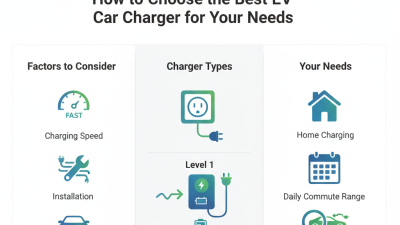
When selecting an EV charging point, understanding the different types is crucial. Level 1 charging is the most basic. It uses a standard household outlet, which means it’s easily accessible. However, it charges vehicles slowly. This option could take up to 12 hours for a full charge. It suits overnight charging at home.
Level 2 charging offers better efficiency. It requires a dedicated charger, which can be installed at home or found in public locations. With a Level 2 charger, you can typically recharge your EV in four to six hours. This is ideal for daily drivers who need a reliable charge after work or errands.
DC Fast Charging represents the quickest option available. These stations are found along major highways. They can charge an EV to about 80% in just 30 minutes or less. However, not all EVs support this type. It’s also essential to consider installation costs and accessibility. Diverse charging needs exist, and reflection on personal habits is key. This ensures your choice aligns with your lifestyle.
How to Choose the Best EV Charging Point for Your Needs?
| Type of Charging Point |
Charging Speed |
Best Use Cases |
Installation Requirements |
Cost Range |
| Level 1 Charging |
4-5 miles per hour |
Home use, overnight charging |
Standard outlet, minimal installation |
$300 - $600 |
| Level 2 Charging |
10-20 miles per hour |
Workplaces, public charging stations |
Requires dedicated circuit installation |
$500 - $1,200 |
| DC Fast Charging |
60-80 miles in 20 minutes |
Highway stops, commercial locations |
Requires significant electrical infrastructure |
$15,000 - $40,000 |
Assessing Charging Point Location: Home, Work, and Public Options
Choosing the right EV charging point requires careful consideration of its location. Your home is often the most convenient option. Installing a charger allows you to charge overnight. However, if you don’t have a dedicated parking space, home charging may not be feasible. Assessing your living situation can lead to alternatives, like public charging stations.
Workplaces also provide an excellent charging opportunity. Many companies are now installing EV chargers to support eco-friendly initiatives. Check if your employer offers this benefit. You may find convenient charging spots at work, allowing you to power up during the day. Still, not all workplaces have chargers available. It’s important to communicate with HR about potential options.
Public charging points are an essential part of the EV infrastructure. They are handy for long trips or when home and work options aren't available. These stations vary in charging speed and availability. Not all locations are fully equipped or reliable. They may also require an app or membership for access. The unpredictability of public chargers can be frustrating, so preparing for these scenarios is crucial.
Evaluating Charging Speed and Compatibility with Your EV Model
When selecting an EV charging point, understanding the charging speed is crucial. Charging speed can vary significantly between different stations.
Level 1 chargers are the slowest, typically providing about 4-5 miles of range per hour. In contrast, Level 2 chargers can offer 10-60 miles per hour, making them ideal for home and public use.
Fast chargers, commonly found on highways, deliver DC fast charging. This option can charge your EV to 80% in just 30 minutes.
Compatibility is essential for ensuring your EV can connect without issues. Each manufacturer may have different charging port designs.
Research your vehicle’s specifications thoroughly before choosing a charging point. Some stations might not be compatible with certain models. Adapters are available, but they can complicate the charging process.
It’s also worth reflecting on your unique circumstances. Consider your daily driving needs and access to charging stations. If you frequently travel longer distances,
you might prioritize faster chargers. However, if you mainly use your vehicle locally, a slower charger might suffice.
Balancing these factors will help you make a more informed choice.
Cost Analysis: Installation, Electricity Rates, and Maintenance Factors
When considering an electric vehicle (EV) charging point, cost factors are crucial. Installation expenses can vary significantly. Professional installation might range from a few hundred to several thousand dollars. Various factors influence these costs, such as location and wiring requirements. Some homes may need an electrical panel upgrade, which adds further to the total cost.
Electricity rates are another essential consideration. Charging an EV can be more economical during off-peak hours. However, some regions have higher rates that can impact long-term cost. Research your local pricing structure. A detailed understanding helps in predicting future expenses. It’s wise not to overlook potential maintenance costs as well. Regular upkeep ensures efficiency but requires budgeting.
Reflect on your specific usage needs. If you drive long distances regularly, investing in a powerful charger can be beneficial. Conversely, for limited daily driving, a simpler solution might suffice. Balancing initial investment with ongoing costs requires careful thought. This process can often lead to unexpected insights about your energy consumption habits.